
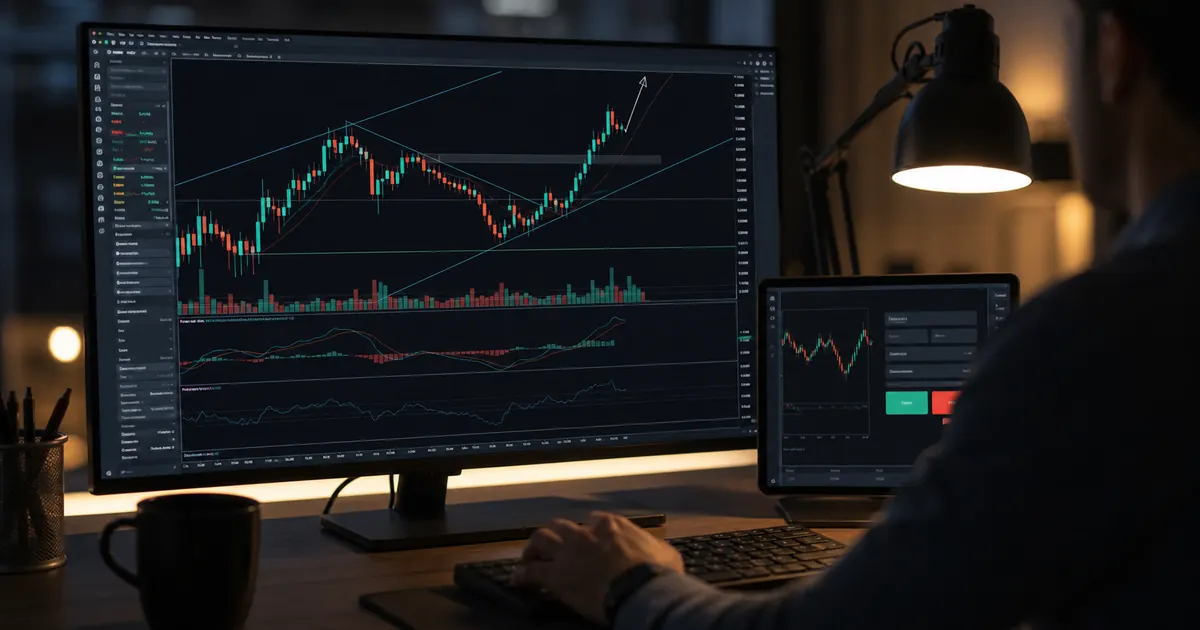
Professional Quotex traders use MT5 before entering a trade because they want a cleaner view of the market before making a short-term decision. Quotex is where the trade is placed, but MT5 is often where the analysis is clearer. It gives structured candles, multiple timeframes, drawing tools, indicators, and a familiar workspace for reading price action.
This does not mean MT5 makes trading risk-free. It means the trader is not relying only on a small execution chart. Better analysis tools can improve decision quality, especially when combined with strict risk management and selective entries.
MT5 helps with market structure
Market structure is the basic map of price. Is price making higher highs and higher lows? Is it making lower highs and lower lows? Is it trapped in a range? MT5 makes this easier to see because you can zoom out, switch timeframes, and mark levels. A trader who understands structure is less likely to take random trades in the middle of noise.
Before entering a Quotex trade, check the higher context. Even if you trade a 1-minute expiry, a quick look at the 5-minute or 15-minute chart can show whether the market is trending, ranging, or approaching an important level. This context can stop you from taking a signal that looks good on a tiny chart but is actually pushing into resistance or support.
MT5 supports cleaner support and resistance
Support and resistance are easier to mark on MT5. You can identify previous highs, previous lows, consolidation zones, and breakout areas. Once those levels are visible, you can wait for price to react before entering on Quotex. This improves selectivity.
A professional trader does not need many lines. One or two important levels near current price are enough. The goal is to know where price may react. If a call signal appears directly under resistance, you may skip it. If a put signal appears at resistance with rejection, it may deserve attention.
MT5 indicators can filter, not decide
Indicators are useful when they support price action, but they should not replace it. A moving average can show short-term direction. RSI can show momentum pressure. ATR can show volatility. But an indicator signal without location or structure is weak. Professionals use indicators as filters, not as automatic permission to trade.
For example, if price is above a moving average and pulling back into support, a call setup may be cleaner than a random call in the middle of a spike. If volatility is unusually high, you may avoid short expiry trades until candles stabilize. MT5 makes these checks quick.
MT5 and AI signal confirmation
If you use AI signals or a Quotex bot, MT5 becomes the confirmation screen. The bot may identify a possible trade, but you can inspect the MT5 chart to see whether the signal matches structure. This is especially helpful for beginners because it turns every signal into a lesson. You start seeing why some alerts are worth taking and others should be skipped.
A good automation setup can also read MT5 data directly. The bot receives candles locally, calculates signal conditions, and then checks execution rules before placing a trade on Quotex. This creates a cleaner connection between analysis and execution.
Multi-timeframe confirmation
One reason experienced traders like MT5 is that they can compare timeframes quickly. A 1-minute signal may look strong, but the 5-minute chart may show price pressing into a major resistance area. A put signal may look late on the 1-minute chart, but the 15-minute chart may show a clean rejection from a previous high. Multi-timeframe confirmation does not mean every timeframe must agree perfectly. It means you understand the larger pressure before taking a short expiry trade.
A simple routine is enough. Check the 15-minute chart for the broad area, the 5-minute chart for short-term structure, and the 1-minute chart for entry timing. If all three are messy, skip. If the higher view shows direction and the lower view gives a clean pullback or rejection, the trade has better context. This habit can reduce random entries because you stop reacting to one candle in isolation.
Pre-trade routine using MT5
Open MT5 and choose the same symbol you plan to trade on Quotex. Check the higher timeframe for direction. Mark the nearest support and resistance. Look at recent candle size to understand volatility. Decide whether the market is clean enough to trade. Then open Quotex and wait for price to reach your planned area.
This routine takes a short time, but it prevents many impulsive entries. If there is no clear direction, no clean level, or payout is low, the correct decision may be no trade. Professionals are comfortable waiting.
Common mistakes when using MT5 for Quotex
The first mistake is symbol mismatch. Always confirm that the MT5 chart and Quotex asset are the same or closely aligned. The second mistake is overloading the chart with indicators. Too many tools can make the decision slower and less clear. The third mistake is ignoring expiry. A setup that may work over five minutes may not work for a one-minute trade.
The fourth mistake is thinking MT5 removes risk. It does not. It only improves analysis. You still need stake limits, daily stops, payout filters, and emotional control. Better charts do not protect an account from oversized trades.
Another mistake is checking MT5 only after the trade loses. Use it before the entry, not as a tool for regret. The value of MT5 is preparation. Once the trade is already placed, the best you can do is record what happened and use the lesson for the next setup.
Why this habit matters
Using MT5 before entering a trade creates a pause. That pause is valuable. It makes you check context before acting. It helps you avoid trades based only on excitement, signal alerts, or recent losses. It gives your bot or manual strategy a more professional workflow.
Professional Quotex traders use MT5 because preparation matters. They want to know the trend, levels, volatility, and signal quality before risking money. If you want to improve your own trading process, start by making MT5 part of your pre-trade checklist and keep your risk rules active every session.
Need the full workflow?
Start with referral verification, test on demo, keep risk controls visible, and use the admin dashboard to manage access cleanly.