
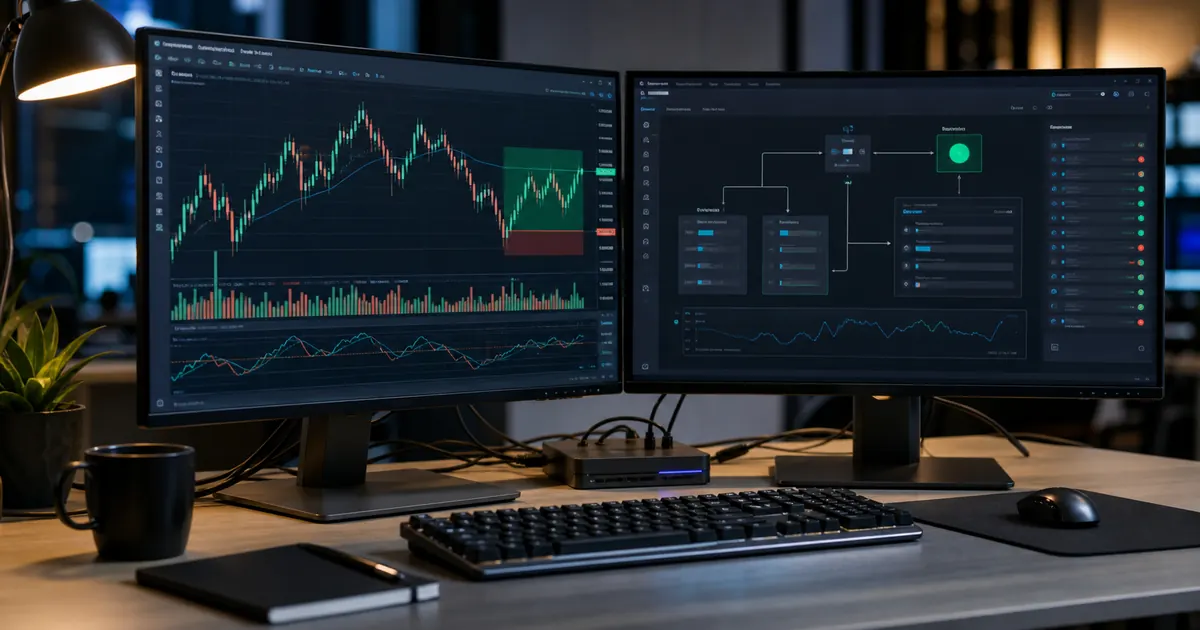
Quotex auto trading becomes more useful when it is built around a clear decision process: read market data, score the setup, check risk rules, verify payout, and only then send an order. AI signals can help with pattern recognition, but they should be combined with MT5 analysis and strict execution filters. Without those controls, automation is just fast guessing.
A practical AI trading workflow does not need to sound mysterious. The system studies recent candles, trend direction, volatility, wick behavior, support and resistance, and short-term momentum. It then produces a probability-based signal such as call, put, or no trade. The most important output is often no trade. A good automation system waits more than it trades because low-quality conditions are common.
Why MT5 belongs in the workflow
MT5 is useful because it gives the bot structured candle data. Browser charts are designed for human viewing. MT5 data is easier for software to analyze consistently. When the bot receives local MT5 data, it can calculate candle closes, moving averages, volatility ranges, and trend filters more reliably. You still execute on Quotex, but the analysis layer becomes cleaner.
This separation matters. Quotex is the execution platform. MT5 is the analysis platform. The automation app is the bridge that reads MT5, checks the signal, and interacts with the Quotex browser. When each part has one job, troubleshooting becomes easier. If no trade happens, you can check whether MT5 data is active, whether the signal threshold was reached, whether payout was acceptable, or whether risk limits blocked the entry.
How AI signals should be filtered
Never allow an AI signal to trade only because it says buy or sell. Add filters. The first filter is trend context. If the short-term trend is strongly upward, a put signal against that trend should require stronger confirmation. The second filter is candle quality. A signal formed inside a small, messy candle cluster is weaker than one formed after a clear rejection from a known level. The third filter is volatility. If candles are expanding too quickly, your expiry may become unreliable.
The fourth filter is payout. A high-quality signal with a poor payout may still be a bad trade. The fifth filter is cooldown. After one trade, the bot should wait before taking another trade on the same pair. This prevents repeated entries during the same noisy movement. These filters make automation slower, but slower is usually safer.
Signal-only mode before auto mode
Before enabling full Quotex auto trading, run the system in signal-only mode. Let the AI mark possible trades while you compare each signal with MT5. Ask three questions: is the market trending or ranging, is the signal near a meaningful level, and is the expiry logical for the candle speed? If the answer is unclear, skip the trade. The goal is not to take every signal. The goal is to learn which signals fit your plan.
After several sessions, move to demo auto trading. Keep stake small and record the outcome. Do not change five settings after every loss. If you change threshold, expiry, pair, and stake together, you will never know what improved or damaged the results. Change one variable at a time and test again.
Risk rules for automated execution
Automation needs hard limits because it can continue trading when you are tired, distracted, or emotional. Set a daily loss limit, daily profit target, maximum trades per session, and maximum consecutive losses. If the bot reaches any limit, it should stop. These rules are not optional. They are the difference between controlled automation and uncontrolled clicking.
Be especially careful with recovery systems. A recovery setting that increases stake after a loss can look powerful in short tests, but it adds pressure to the account. If you use recovery, cap the maximum step, cap the maximum stake, and stop after a small number of failed attempts. Never let the bot keep increasing trade size until the account cannot absorb the next loss.
Building a realistic automation routine
Choose one session, one pair, and one expiry for your first serious test. Open MT5, confirm the data feed, open Quotex inside the app, and check that the selected asset matches the MT5 symbol. Then review the risk panel before enabling automation. This routine may take two minutes, but it catches the most common errors: wrong pair, wrong account mode, low payout, old MT5 feed, and forgotten stake size.
During the session, watch the first few trades. Even a well-built bot should be supervised, especially after a platform update or internet interruption. If the bot behaves differently from expected, stop and inspect logs. Logs should show signal time, pair, direction, confidence score, payout, expiry, stake, and reason for entry or rejection. A bot without useful logs is difficult to trust.
A practical example of a filtered AI trade
Imagine EURUSD is in a mild uptrend on MT5. Price pulls back toward a previous support zone, prints a small rejection candle, and the AI signal changes from no trade to call with a stronger score. Before execution, the app checks the payout and sees that it is above your minimum. It checks cooldown and confirms no recent trade was taken on the same pair. It checks your daily limit and confirms you are still inside the session plan. Only after those checks does the trade become valid.
Now compare that with a weaker situation. The same call signal appears, but price is sitting directly below resistance, payout has dropped, and the last candle is unusually large. A disciplined auto trading system should reject that trade or keep it in signal-only mode. This is how AI becomes practical: not by trading every prediction, but by combining prediction with market context and account rules.
What AI cannot do
AI cannot remove market risk. It cannot know the future, guarantee a fixed win rate, or make every market condition tradable. AI can help classify patterns and apply rules consistently, but the trader is still responsible for account size, risk settings, and when to stop. This is why good automation feels boring. It waits, filters, enters selectively, and stops when the rules say stop.
Use AI signals as one part of a structured workflow. Let MT5 provide clean data. Let the bot enforce risk controls. Let your demo testing decide whether the setup is worth continuing. When those pieces work together, Quotex auto trading becomes a disciplined process instead of an emotional reaction to every candle.
Need the full workflow?
Start with referral verification, test on demo, keep risk controls visible, and use the admin dashboard to manage access cleanly.