
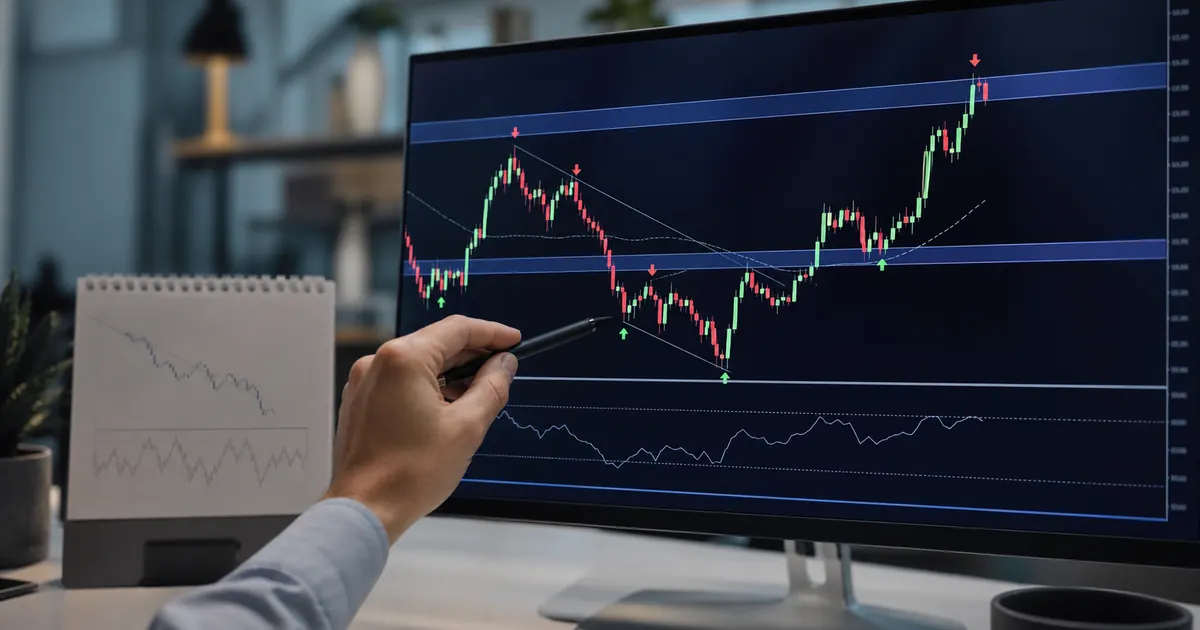
Accurate Quotex signals do not come from one indicator alone. They come from context. A signal is stronger when MT5 data, price action, trend direction, support and resistance, candle quality, payout, and timing all agree. A signal is weaker when it appears in the middle of noise, during unstable candles, or against a strong move without a clear rejection level.
This matters because many traders ask the wrong question. They ask, "Which signal provider has the highest accuracy?" A better question is, "Which signals can I verify before risking money?" Verification is what separates a useful signal from a random alert. If you can check why the signal appeared, you can improve your decisions over time.
Start with clean MT5 data
MT5 is valuable because it shows structured candles and allows you to analyze price without relying only on the broker's visual chart. When a Quotex signal tool connects to MT5, it can read open, high, low, close, candle time, and recent volatility in a more organized way. That gives the signal engine better input. Better input does not guarantee profit, but poor input almost always creates poor decisions.
Make sure the MT5 symbol matches the Quotex asset you want to trade. A mismatch can ruin signal quality. If you are watching EURUSD on Quotex but the data feed is GBPUSD, the signal may look random because it is based on the wrong chart. Always check the active feed before starting a session.
Use price action before indicators
Price action means reading what price is doing directly. Is it trending, ranging, rejecting a level, breaking structure, or slowing down? Indicators can help summarize this, but they should not replace the chart. A moving average signal near strong resistance is different from the same signal after a clean pullback in an uptrend. Context changes meaning.
For call signals, look for price holding support, creating higher lows, or rejecting a lower level with a strong close. For put signals, look for price failing at resistance, creating lower highs, or rejecting an upper level. If the chart is flat and candles overlap heavily, even a confident-looking signal may not be worth taking.
Build a signal rejection checklist
A professional signal process includes reasons to say no. Reject a signal if the payout is too low, if the candle is unusually large, if the signal appears just before or during a volatile news move, if the asset is moving sideways without clean levels, or if your daily risk limit is already close. Reject a signal if it appears immediately after a loss and you feel pressure to recover.
This rejection checklist improves accuracy because it removes low-quality trades from your sample. Many traders think they need more signals. Usually they need fewer, better signals. If a tool gives 50 alerts in a session, but only five match your rules, those five are the only ones that matter.
Confirm with support and resistance
Support and resistance are not exact magic lines. They are zones where price has reacted before. A Quotex signal near a zone is easier to evaluate because you can see whether price is accepting or rejecting that area. If price reaches resistance and forms a bearish rejection candle, a put signal has context. If price reaches support and forms a bullish rejection candle, a call signal has context.
Signals in the middle of a range are harder. Price can move either way without a clear reason. For short expiry trading, middle-of-range entries often produce stress because there is not enough space for clean movement. Waiting for price to reach an edge can reduce overtrading.
Trend filter for better signal quality
A simple trend filter can improve signal selection. If recent highs and lows are rising, prioritize call signals after pullbacks. If recent highs and lows are falling, prioritize put signals after pullbacks. Counter-trend signals should require stronger evidence, such as a clear rejection from a major level. This does not mean trend trades always win. It means you stop fighting strong direction without a reason.
In fast 1-minute trading, this filter is especially important. A signal against momentum may expire before the reversal has enough time to develop. If the trade needs more time than your expiry allows, the setup is wrong for that expiry.
How AI signal tools should explain themselves
A useful AI signal tool should show more than "UP" or "DOWN." It should show confidence, reason tags, recent candle behavior, trend status, payout status, and whether any risk filter blocked the trade. Reason tags might include trend continuation, support rejection, resistance rejection, volatility warning, or low payout. These details help you learn and make the signal auditable.
If a signal tool cannot explain why an alert appeared, use it carefully. Black-box alerts can create dependency. Transparent signals create skill. The long-term goal is not only to follow signals; it is to understand which signals deserve attention.
A simple signal scoring model
You can create your own scoring model even if the software already gives a confidence number. Give one point for trend alignment, one point for a clear level, one point for candle confirmation, one point for acceptable payout, and one point for calm volatility. A signal with four or five points may be worth demo testing. A signal with only two points is probably a skip. This simple habit makes your decision less emotional because you are no longer asking whether you feel good about the trade. You are checking whether the setup earns permission.
Over time, compare high-score and low-score signals in your journal. If high-score signals consistently behave better, keep the model. If one factor does not help, adjust it. This is how traders turn raw Quotex signals into a personal process that fits their pair, timeframe, and risk tolerance.
Demo tracking for signal accuracy
Track at least 50 to 100 demo signals before judging accuracy. Record the pair, time, signal direction, market condition, payout, result, and whether you followed the checklist. Separate all signals from qualified signals. You may discover that raw signal accuracy is average, but qualified signal accuracy is much better because your filters remove weak setups.
Do not manipulate the results by skipping losses in your notes. Honest tracking is the only useful tracking. If a signal loses but followed every rule, write that down. Good trades can lose. Bad trades can win. Your review should judge process first and result second.
The realistic goal
The goal is not perfect Quotex signals. Perfect signals do not exist. The goal is a process that finds cleaner setups, avoids obvious danger, and protects your account when conditions are poor. MT5 gives cleaner data. Price action gives context. Risk rules protect the account. Put those together and your signal workflow becomes much more professional.
Need the full workflow?
Start with referral verification, test on demo, keep risk controls visible, and use the admin dashboard to manage access cleanly.