
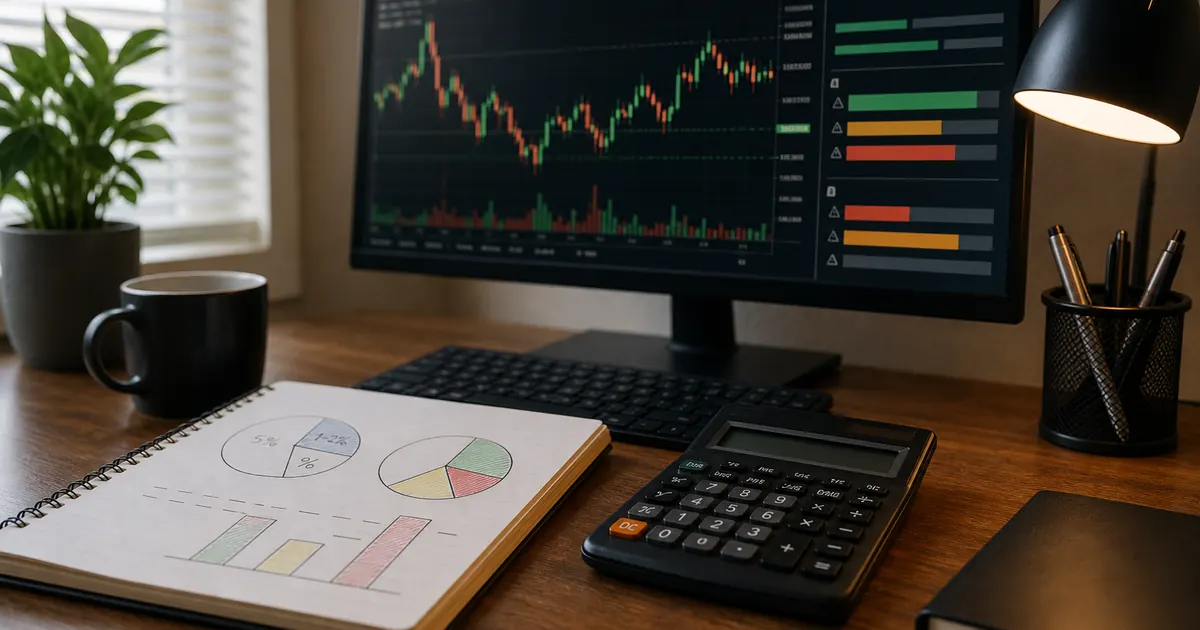
Quotex money management is the difference between staying in the game and blowing your account after one emotional session. A trader can have a decent strategy and still lose everything if stake size is too high, recovery is uncontrolled, or the daily stop is ignored. The goal of money management is simple: make sure no single trade, sequence, or bad day can destroy the account.
Many beginners focus only on entries. They search for the best signal, best bot, best indicator, or best 1-minute strategy. Entries matter, but money management decides how much each entry can hurt. If the damage is too large, even a good strategy becomes dangerous.
Start with account percentage thinking
Instead of choosing a random stake, think in percentages. A small account should use a very small stake. A larger account can use a larger stake, but the percentage should still be controlled. If one loss makes you anxious, the stake is too high. If three losses in a row would make you abandon the plan, the stake is too high.
Fixed stake is usually best for learning. It keeps the math clear and reduces emotional decisions. Once you have real data over many trades, you can review whether any adjustment is justified. Until then, fixed stake keeps you honest.
Separate trading balance from life money
Only trade with money you can afford to lose. This is not just a legal phrase. It changes behavior. If the money is needed for bills, family, rent, or debt, every candle becomes emotional. You will be more likely to chase losses and break rules because the outcome feels urgent. Trading with pressure is a fast way to make bad decisions.
Decide your trading balance before you start. Do not keep adding funds during a losing day. If the account reaches the planned stop, trading ends. Adding more money to continue the same emotional session is not a strategy.
Use session limits
A session limit controls how many opportunities you will take. For example, you may decide to take a maximum of 10 trades, stop after three losses in a row, or stop after reaching a small target. These limits reduce fatigue. Short-term trading requires attention, and attention drops faster than most traders admit.
Session limits also make review easier. If you trade 70 random entries in one day, it is difficult to learn. If you trade 8 planned entries, you can review each one properly. Better records lead to better decisions.
Understand payout and break-even
In fixed-time trading, payout affects the win rate required to break even. Lower payout means you need more wins to cover losses. This is why money management must include a payout filter. If the payout is poor, skip the trade. A good-looking setup with bad payout may not be worth the risk.
A bot can help by blocking trades below your minimum payout. Manual traders should check payout before every entry. Do not assume it stays the same. Payout can change during the session.
Avoid the recovery trap
The recovery trap starts with one loss. You increase stake to win it back. If that loses, you increase again. Soon the next trade is much larger than your original plan. Even if a recovery system wins often, the rare losing sequence can be expensive. This is why many accounts are blown by a method that looked safe for days.
If you insist on recovery, write the maximum sequence before trading. Decide the exact maximum stake, number of steps, and loss where the sequence ends. If the limit is reached, stop. Never adjust the cap during the sequence because emotion will push you to continue.
Money management for bot users
If you use a Quotex trading bot, configure stake, daily loss, daily profit, maximum trades, cooldown, payout filter, and consecutive loss stop before enabling automation. Do not rely on memory. Automation follows settings, so settings must be correct. Check whether the app is in demo or real mode before every session.
Review logs after the session. A good bot log should show why trades were taken and why trades were skipped. If the bot skipped because payout was low or cooldown was active, that is not a problem. That is the system protecting you.
A weekly money management routine
At the end of each week, review your account plan instead of only checking whether you made money. Look at the biggest losing day, the biggest winning day, the number of trades, the average stake, and the moments when you broke rules. If one day caused most of the damage, study that day carefully. Usually the issue is not the whole strategy. It is one session where the trader kept going after the stop should have ended the day.
Use that review to adjust limits, not to chase bigger targets. If you noticed that your focus drops after 12 trades, set the next week's maximum to 10. If you noticed that low payout trades performed poorly, raise the payout filter. If recovery caused stress, disable it for the next test. Small weekly adjustments are more professional than changing everything after one emotional loss.
This routine also helps bot users. Export or read the logs, check whether the bot followed your rules, and confirm that your settings still match your account size. Money management is not a one-time setup. It is a maintenance habit.
Build a simple money plan
- Choose one fixed stake for the session.
- Set a maximum daily loss before trading.
- Set a maximum number of trades.
- Stop after a defined losing streak.
- Trade only when payout meets your rule.
- Do not add funds to continue a bad session.
Print this plan mentally before every session. If you cannot state the stake, stop loss, target, and maximum trades in a few seconds, you are not ready to start. Clear rules reduce hesitation when the market becomes stressful.
The best Quotex money management guide is not complicated. Keep stake small, limit the day, avoid unlimited recovery, respect payout, and review every session. Your account does not need heroic trades. It needs protection from oversized decisions. When money management is strong, you give yourself time to become a better trader.
Need the full workflow?
Start with referral verification, test on demo, keep risk controls visible, and use the admin dashboard to manage access cleanly.